
Health is wealth! Knowledge and awareness of healthcare is very much needed. The primitive communities are mostly illiterate and forest dwellers. Their health system and medical knowledge over ages known as "Traditional Health Care System" depend both on the herbal and the psychosomatic lines of treatment. While plants, flowers, seeds, animals and other naturally available substances formed the major basis of treatment, this practice always had a touch of mysticism, supernatural and magic, often resulting in specific magical-religious rites. Faith healing has always been a part of the traditional treatment in the Tribal Health Care System, which can be equated with rapport or confidence building in the modern treatment procedure.
For example, the doctor priests of the Saora tribe utilize several herbs and roots in conjunction with their magical-religious rites in Orissa. Health problems and health practices of tribal communities have been profoundly influenced by the interplay of complex social, cultural, educational, economic and political practices. The study of the health culture of tribal communities belonging to the poorest strata of society is highly desirable and essential to determine their access to different health services available in a social set up. The common beliefs, customs, traditions, values, and practices connected with health and disease have been closely associated with the treatment of diseases.
In most of the tribal communities, there is a wealth of folklore
associated with health beliefs. Knowledge of folklore of different
socio-cultural systems of tribal may have a positive impact, which
could provide the model for appropriate health and sanitary
practices in a given eco-system. The health culture of a community
does not change so easily with changes in access to various health
services. Hence, it is required to change the health services to
conform to the healthy culture of tribal communities for optimal
utilization of health services.
Vector-borne disease,
dengue seems to spread its tentacles in Odisha with the number of
cases registering more than four-fold rise so far this year as
compared to last year. Health Services Director, today informed
that from January till July 23rd, 2018, the total number of dengue
cases recorded stands at 1,841, significantly higher than 412
cases registered during the corresponding period last year. A
total of 9,794 blood samples were tested this year. A healthy
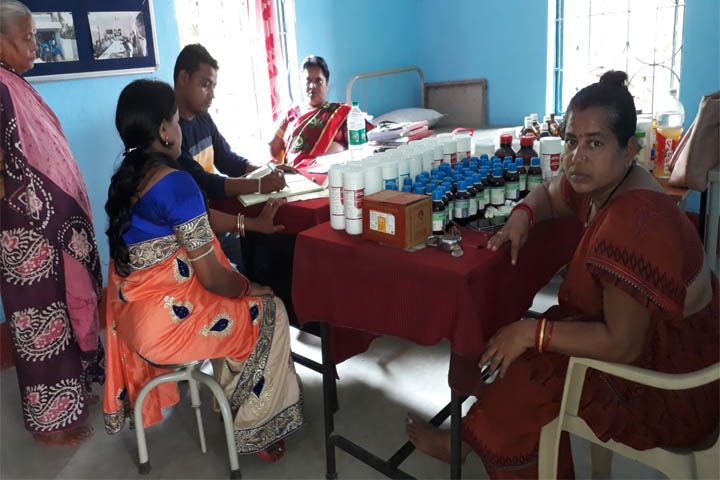
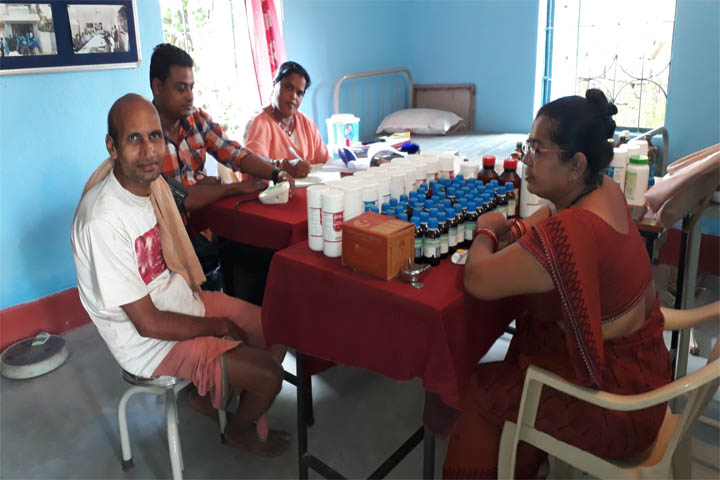
nation implies a wealthy nation. The intervention has been
designed to provide free health services in terms of alternative
medicine (Homeopathic) and educate the downtrodden mass to be
aware of their health problems and remedies as well. This will,
directly and indirectly, improve the economy of the family and
improve the overall socio-economic health of society..
© 2019 Caad Odisha. All rights reserved | Designed by Technomindssolutions Pvt Ltd.